

Session 6.
Game Option #1
Wreck-It Ralph - Soccer Edition
Objective
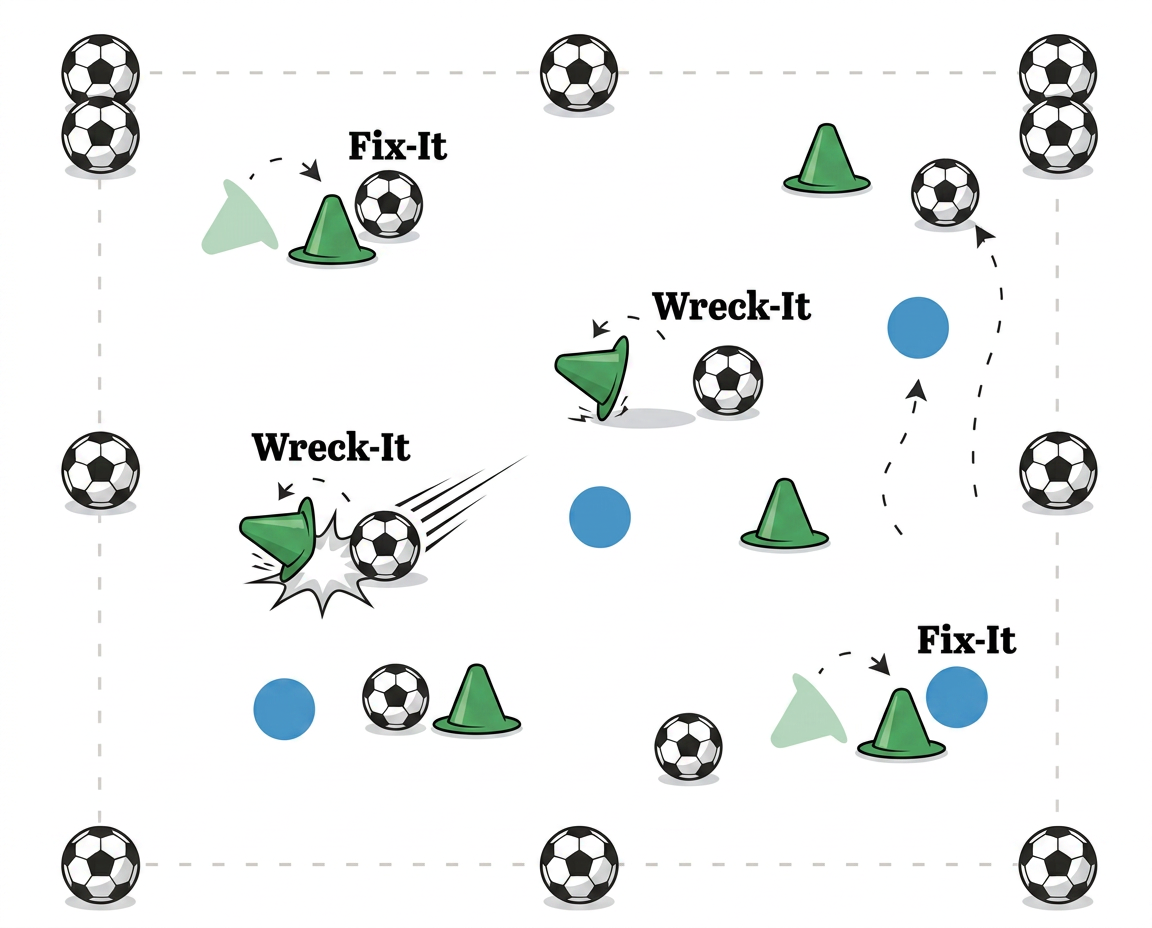
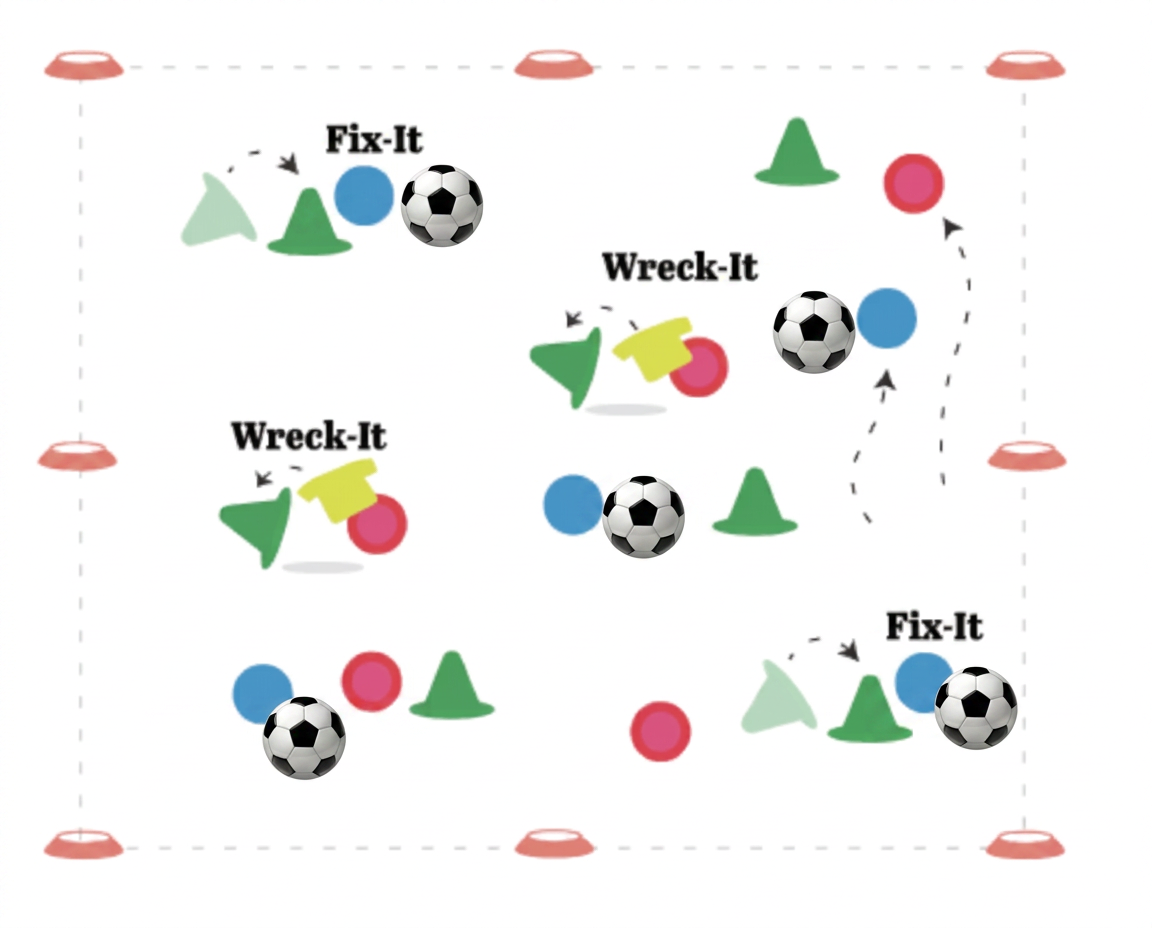
The Wreck-It Ralphs knock cones down. The Fix-It Felixes stand them back up. Whichever team has more cones in their favour when the whistle goes wins the round.
Set-Up
Mark a 20x20 grid (30x30 for larger groups or older kids). Grass or blacktop.
Scatter 15–20 cones randomly inside the grid — not in lines, not clustered in one corner.
Split into two even teams. Give one team bibs.
Ralphs start on the outside line. Felixes start inside the grid, hands on heads.
How to Play (base game — no ball)
On "GO," Ralphs run in and knock cones over with their hands or feet.
Felixes stand cones back up. They cannot block, shield, or stand guard over a cone.
No pushing, no grabbing, no holding a cone down.
Round lasts 30 seconds. On the whistle, everyone freezes and you count standing vs. knocked cones.
Swap roles and go again. Play 4–6 rounds, tracking the score.
Run at least two rounds like this before you introduce anything else. Kids need to understand the freeze, the count, and the no-blocking rule before you add equipment.
Adding the Soccer Ball
Once the rules are locked in, give every Ralph a ball. Felixes stay ball-free — this is a safety rule, not a preference. Felixes are bending down to reset cones, and you don't want balls flying at head height into that.
Ralphs must knock cones over with the ball only — no hands, no kicking the cone directly with the foot.
If a Ralph's ball leaves the grid, they dribble it back in. No throwing.
Everything else stays the same: 30 seconds, freeze, count, swap.
Progressions
Weak foot only — Ralphs knock cones over using their non-dominant foot.
Feet only for Felixes — Felixes reset cones with feet, no hands. Slows them down and adds balance work.
Safe zone — Put bibs on top of 3 cones. Those are protected and count double if still standing at the whistle. Ralphs choose: easy cones or high-value ones?
Power-up — One Felix per round wears a bib as "Super Felix" and can reset two cones at once.
Wreck-It Ralph’s: Use a bib to knock over the cones, while Felix dribbles ball before putting cones back up.
Fix-It Felix’s: Put up the cones using their feet.
Game Option #2.
Olympic Handball - 15/20 minutes
Start
The game starts with two opponents playing Rock, Paper, and Scissors to decide which team starts with the ball.
To allow for faster play, after a goal is scored, the game can resume before all opponents are back on their side of the court (the team taking the throw-off, however, must still be on its own half).
Touching
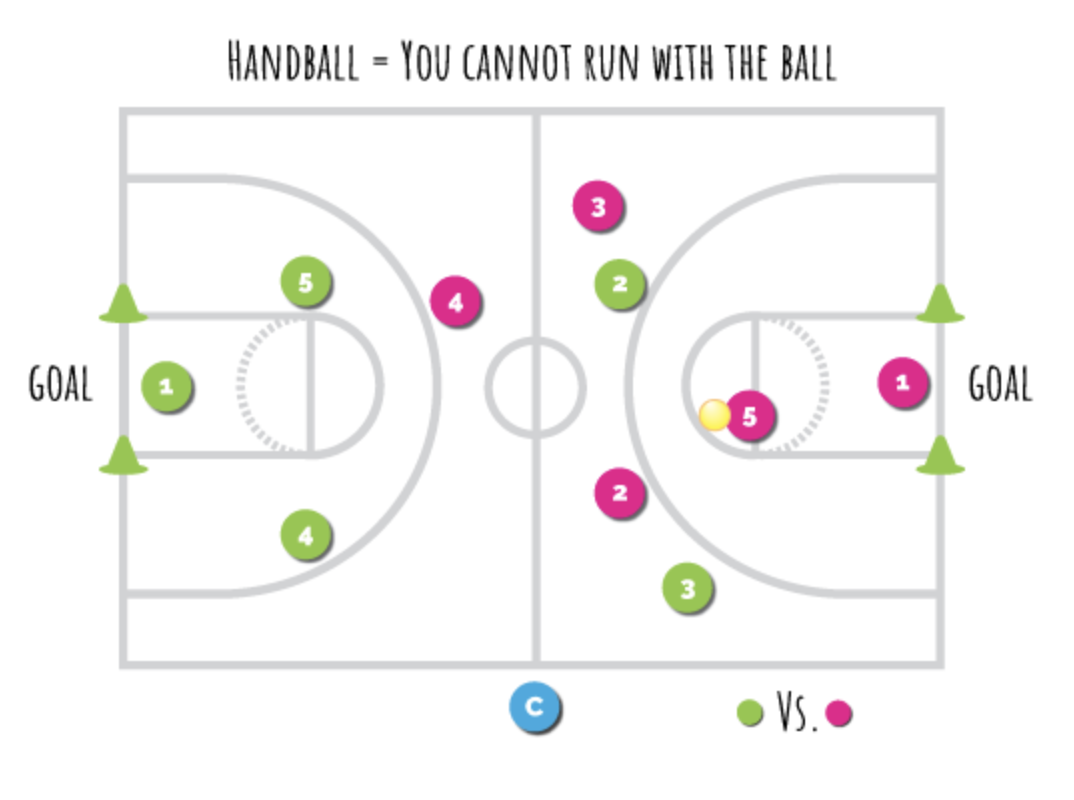
A player may stop, catch, throw, bounce or strike the ball in any manner and in any direction, using hands, fists, arms, head, body, thighs or knees. However, a player may not intentionally touch the ball with any part of the body below the knee. The ball is almost always played with the hands.
Possession
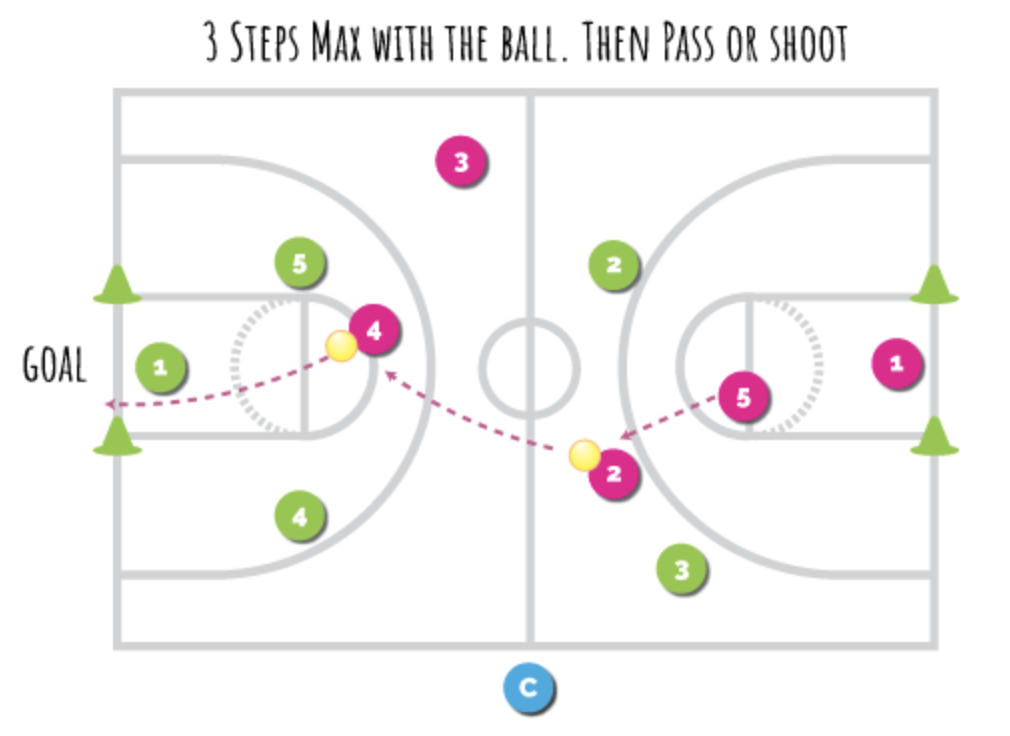
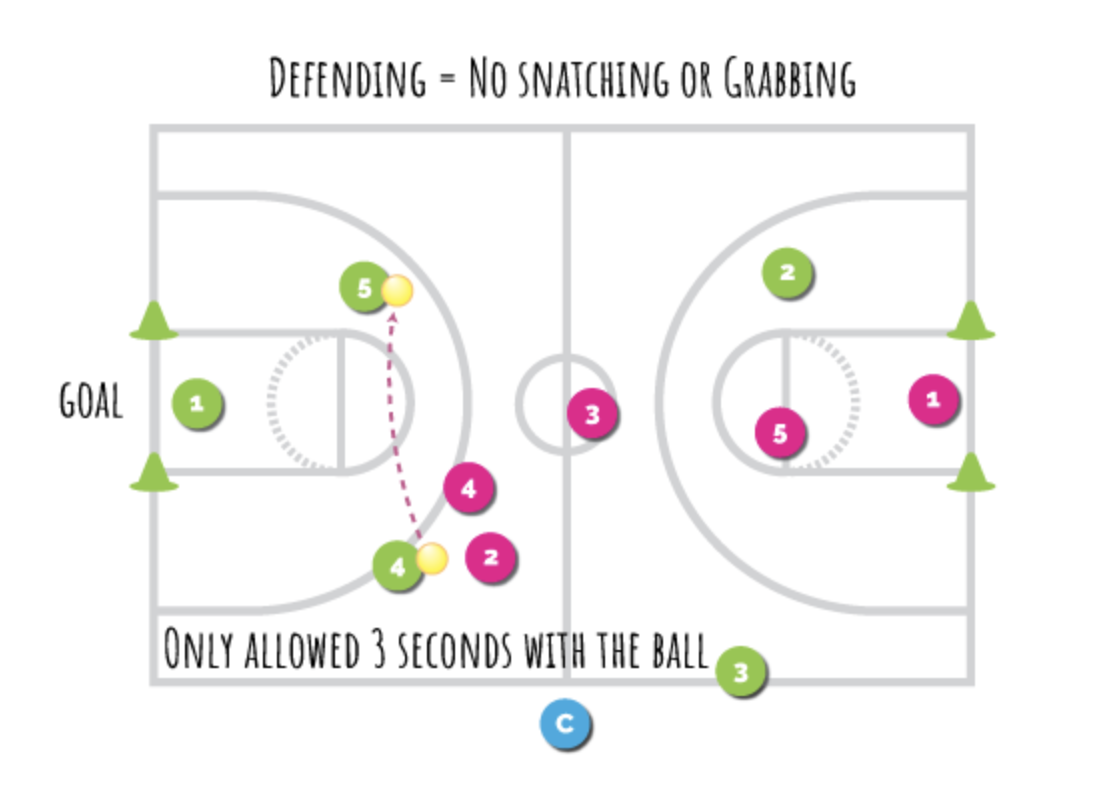
A player in possession of the ball may stand stationary for only three seconds before shooting, or passing. A player may not touch the ball more than once, unless it has touched the ground, touched another player, or bounced off a goal post (in other words, a player can't pass to himself/herself).
Dribbling
Players typically advance the ball down the court by passing it between each other. A player in possession of the ball may not take more than three steps without shooting, passing or dribbling the ball. In handball, dribbling typically involves bouncing the ball and catching it - a slight variation from the more fluid dribbling associated with basketball.
Defense
Defensive players may not hold, hit, push or trip an offensive player. Among the tactics a defensive player may use to gain control of the ball are using the flat part of the hand to knock the ball away from the offensive player, and obstructing the opponent with the body, whether or not the player has the ball. It is forbidden to snatch the ball with one or both hands or violently strike or slap the ball from an opponent's hands. Offensive players may set basketball-style screens in order to shield or free a teammate from a defensive player.
Goalkeeping
Only the goalkeeper may dive for and trap the ball when it is stationary or rolling on the ground in the goal area. Once the goalkeeper leaves the goal area, the athlete must adhere to the same rules as field players. Other players may dive for a bouncing ball and tap it or throw it quickly to a teammate, but they cannot trap the ball with their feet.
Goal area
Only the goalkeeper is permitted to enter the goal area, and the other players are not allowed to touch the ball when it is on the ground in the goal area.
Game Option #3.
Groundhog Day
Objective:
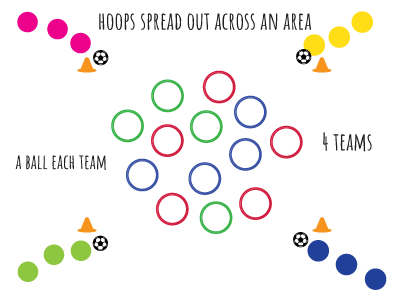
Students kick or roll the ball into hoops. If they score, they take the hoop back to their team. The team with the most hoops at the end wins.
Set-up:
Use the grass field or spacious blacktop area
Set up cones to serve as starting lines for each team
Lay out hula hoops randomly about 10 yards away from the starting lines
Form 2-4 teams depending on class size and form a line at the starting cones
2-4 soccer balls or other types of balls
How to Play:
The first person in line will attempt to roll or kick the ball into any hula hoop
If they make it, the student goes and picks up the hula hoop and takes it back to base with their ball
If they miss, the student must retrieve the ball and pass/hand it off to the next person before returning to their line
The team with the most hoops after 3-4 minutes wins the game or when all the hoops have been taken

Add Volcanoes
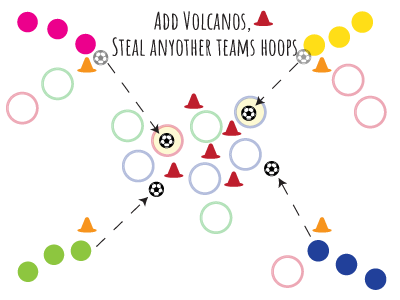
Inject excitement with 'tall cone' volcanoes! By successfully knocking one down, your team can steal hoops from rivals. This dramatic twist ensures that no team is ever truly out of the game, allowing for spectacular comebacks and thrilling finishes.
Progression:
If the students were kicking the ball, have them now roll the ball instead. Or if students were rolling the ball, have them attempt to kick the ball into the hoop
Students do 5 jumping jacks or other exercise before shooting
Ask students to close their eyes before rolling the ball for more fun
Students must roll the ball or kick the ball with their weak hand or foot


End Chat
Bring the group in at the end of the session and ask questions about the what they just worked on. Examples:
Q. What did you do in the session?
Q. What did you learn?
Give stickers out to kids who did well.
Choose a child who did a great job and they choose the end cheer for the group.